
The result in four numbers
The full picture
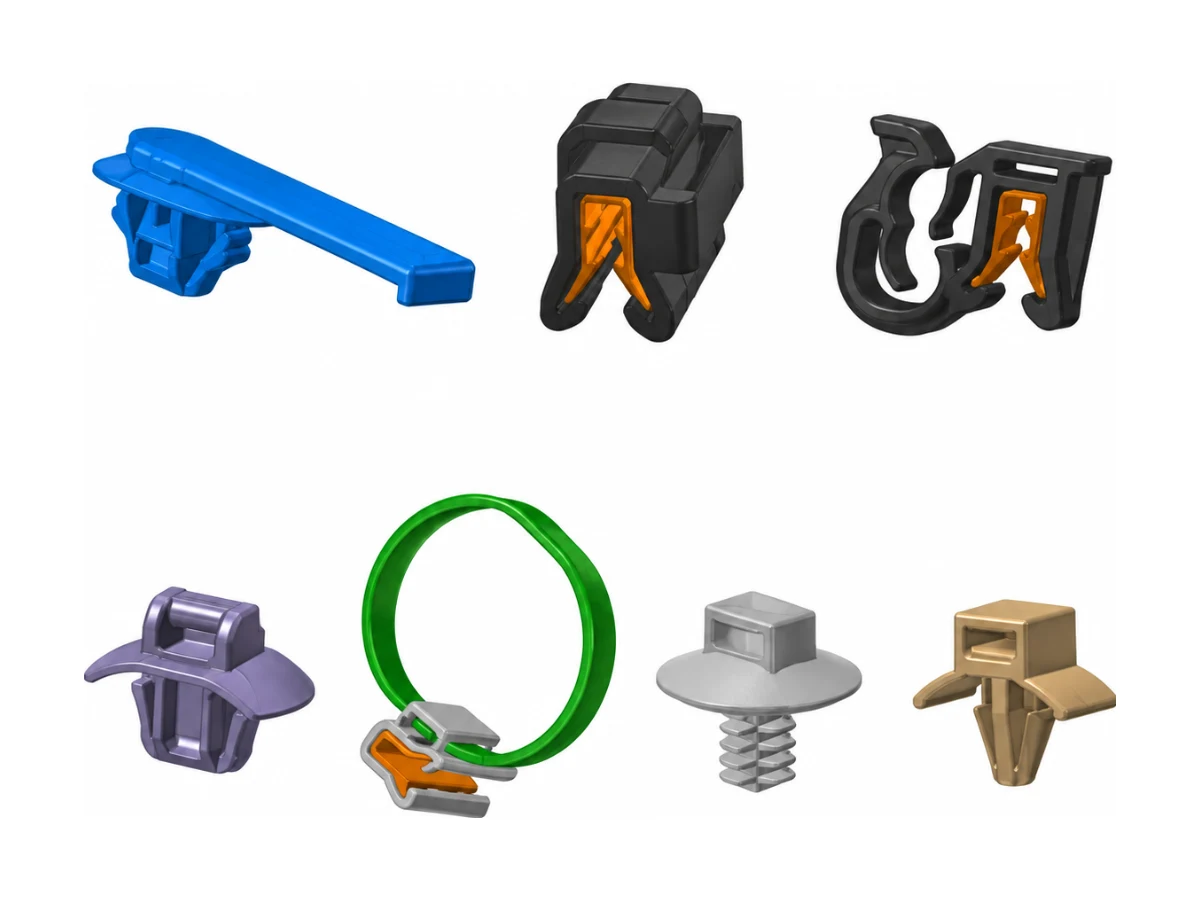
A Tier 1 customer serving a European OEM needed a supplier ready to take over production of a wire harness clip at a volume of 10–12 M pcs per month. Requirements: CPK > 1.67 for the snap-fit dimension, scrap rate below 0.5%, JIT deliveries on a two-day cycle.
The previous supplier ran a 14 s cycle, which with an 8-cavity mould meant output too low for the OEM's production plans.
We designed the process around PA6 GF30 with a 16-cavity mould on an Arburg machine from our own fleet. A full Moldex3D analysis focused on fill balance (cavity balancing) and cooling channel optimisation to cut the cooling phase as far as possible.
We implemented online SPC for two critical dimensions: a sample measured every 30 minutes, with automatic escalation at a deviation > 0.6σ.
After six months of series production: 9.6 s cycle (31% shorter than the benchmark), CPK 1.71 for the snap-fit dimension, scrap rate 0.28%. OTD 100%, no quality complaints over 12 months.
The client extended the collaboration to two further size variants of the component and is considering transferring the remaining clips in its portfolio.